When the preliminary hearing for former Kanakuk Kamp director Pete Newman starts in less than an hour, one issue that will be taken up is a motion filed by Taney County Prosecuting Attorney Jeffrey Merrell to revoke Newman's bond.
The bond was initially set at $50,000 but was increased to $100,000 after Newman failed to show for the beginning of a hearing Oct. 29.
Newman is charged with four felony sex crimes involving underage boys.
***
(Randy Turner's new book, Newspaper Days, is available at Amazon.com
Tuesday, November 17, 2009


Jeff Smith sentenced to one year and one day in prison: Steve Brown gets probation
A federal judge sentenced former Sen. Jeff Smith, D-St. Louis to one year and one day in jail this morning. He will also have to pay a $50,000 fine. The judge rejected Smith's attempt to get off with community service and house arrest.
Former Rep. Steve Brown, D-St. Louis, who cooperated with the FBI in its investigation, received two years probation and was fined $40,000.
Former Rep. Steve Brown, D-St. Louis, who cooperated with the FBI in its investigation, received two years probation and was fined $40,000.
Newman attorneys object to decision on child witnesses
Online Taney County Circuit Court records indicate former Kanakuk Kamps director Pete Newman's attorney, Tom Carver of Springfield, objected to the prosecuting attorney's motion to use Missouri's new Child Witness Protection Act during today's preliminary hearing.
Newman is charged with four felony sex crimes involving underage boys.
Judge Tony Williams not only went along with the prosecutor's recommendations, but has closed the courtroom for today's hearing, according to the Crime Scene blog.
The basic concepts of the Child Witness Protection Law, taken from a description on the General Assembly website, is printed below:
Newman is charged with four felony sex crimes involving underage boys.
Judge Tony Williams not only went along with the prosecutor's recommendations, but has closed the courtroom for today's hearing, according to the Crime Scene blog.
The basic concepts of the Child Witness Protection Law, taken from a description on the General Assembly website, is printed below:
The “Child Witness Protection Act” was created in 491.725 RSMo. to give courts the discretion to make numerous changes to
court procedures to help prevent children from becoming confused, intimidated or harassed when they participate in court proceedings.
Some of the accommodations include changes to the oath required of witnesses to make it more easily understood by children, limiting the duration or timing of questioning, rephrasing confusing or harassing questions, changing the layout of the courtroom, or allowing the child to hold a toy, blanket or similar item during testimony. Perhaps most importantly, the court may designate a “support person” who may accompany a child to the witness box and remain near the child but who may not obstruct the defendant’s view of the child-witness or influence the child’s testimony in any way.
New Missouri tourism director has history of ignoring law

After Katie Steele Danner was named director of the Missouri Division of Tourism last week, I was fascinated by the savage way in which any mention of her previous brushes with the law was immediately decried as partisan or outright lies in the comments left on numerous news websites.
Of course, her blotter record was left out of every one of the articles I saw, and on one level I can agree with that. The fact that she was stopped on suspicion of driving while intoxicated years ago, is not enough to disqualify someone from holding public office.
What has always been disturbing to me about the former Democratic state representative and Jay Nixon fundraiser is that she simply refused to take breathalyzer tests on two occasions.
As I noted in the Sept. 14 Turner Report:
On March 13, 2007, the Missouri Southern District Court of Appeals ordered Taney County Circuit Court Judge Tony Williams to revoke Ms. Steele-Danner's driver's license, after Williams had restored her driving privileges in an earlier decision.
Ms. Danner-Steele, under the name Katie Steele, was a state representative from Kirksville, the state director of Bill Clinton's presidential campaign in 1992 and later was appointed by President Clinton as regional director for the Kansas City office of the Department of Health and Human Services. She is married to former State Senator Steve Danner, a close advisor to former Speaker of the House Bob Griffin and current adjutant general.
According to the appellate court decision, "Kathleen Steele-Danner was stopped by Officer Shawn Teitsort for speeding. The officer noticed a strong odor of alcohol on her breath. When asked how much she had to drink, she stated she had one glass of wine. (She) was asked to perform field sobriety tests and was subsequently arrested for driving while intoxicated.
"After arriving at the Branson Police Department and reading Missouri's Implied Consent law to (Ms. Steele-Danner) Officer Teitsort requested that the respondent submit to a breath test. She refused and her license was revoked."
The decision came down to whether Teitsort had reason to believe Ms. Steele-Danner was driving drunk.
Respondent had to steady herself using the car door when exiting her vehicle. He observed her swaying as she walked. Her eyes appeared bloodshot and "staring." She continued to sway during the horizontal gaze nystagmus test ("HGN") and the officer noted a lack of "smooth pursuit" in both eyes and a distinct nystagmus at maximum deviation, with an onset prior to forty-five degrees, indicating intoxication.
When Respondent performed the walk-and-turn test, she did not take the correct number of steps, used her arms for balance and did not make a proper turn. Because she stepped off of the line three times, the officer deemed her unable to complete the test. Likewise, she put her foot down three or more times on the one-leg stand test and was unable to complete the test. Based upon his training, experience, and observations, Officer Teitsort testified that he formed the opinion that Respondent was intoxicated and placed her under arrest for driving while intoxicated. On the issue of the officer's credibility, as the Director points out, the trial court put its stamp of approval on Officer Teitsort by indicating, "I believe [Officer Teitsort] administered the tests properly. In fact, that officer is one of the finest."
Judge Williams based his decision on Teitsort's comments during cross examination that he thought Ms. Steele-Danner was "borderline" and might not fail the breathalyzer test:
[Defense Counsel]: Okay. And you were surprised she didn't take the test?
[Officer]: Yes, sir.
[Defense counsel]: Because you thought she might not have been above a .08?
[Officer]: I believed she was borderline. That's correct.
[Defense Counsel]: Okay. You thought she might not have been above .08?
[Officer]: That's correct.
The appellate court gave the following summary of the case:
Respondent was stopped at 1:38 a.m. for speeding fourteen miles per hour over the speed limit. She had a strong odor of alcohol and bloodshot eyes, had trouble with balance and walking, and was uncertain in her turning. Respondent was unable to follow directions for the walk-and-turn test and admitted to drinking alcohol earlier during the evening. The trial court misapplied the law when it found Officer Teitsort's testimony that he was surprised when Respondent refused to take the test because the officer thought Respondent was borderline -- that there was a possibility she would pass the test -- negated the probable cause determination that she was driving her vehicle while in an intoxicated condition. In so doing, the trial court disregarded Officer Teitsort's objective and credible observation of Respondent's unusual and illegal motor vehicle operation and indicia of intoxication from field sobriety tests, which objectively constitute probable cause.
The decision was 2-1, with the dissenting judge agreeing that the case should be returned to Judge Williams, but only to determine if the officer had properly administered the field tests to give him probable cause.
***
Clay County Circuit Court records indicate Ms. Steele-Danner had her license taken away after refusing to take a breathalyzer test . Her driving privileges were restored Jan. 15, 1997, by Clay County Circuit Court Judge Rex Gabbert.
If Jay Nixon wants to appoint Ms. Steele-Danner as director of tourism, that is his choice. And while I appreciate her long resume and the glowing reviews given by those who say she will be God's gift to Missouri tourism, it is a shame that the media did not provide even one word about the other side of her record.
The only time it has even been mentioned was after she was named interim economic development director, and that was solely as a response to what was written in The Turner Report. The incidents were not even examined, nor was the court record. Reporters simply asked the same usual sources if Ms. Steele-Danner's record would hurt her. The sources said it wouldn't, so the "watchdog" media simply dropped the matter.
Is it any wonder people have no faith in the media?
Smith, Brown sentencing less than three hours away

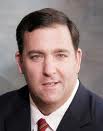
Former Sen. Jeff Smith, D-St. Louis, will be sentenced in less than three hours for his role in obstructing a federal investigation into monkey business during Smith's unsuccessful 2006 Congressional primary campaign against Russ Carnahan.
Also scheduled to be sentenced are Smith's co-conspirators, former Rep. Steve Brown, D-St. Louis, and Smith's campaign treasurer Nick Adams.
The final few days before today's hearing have been marked by maneuvering by attorneys for the three men all carefully shielded from the public, to get them lighter sentences. The only such document filed openly, a memorandum by Brown's attorney asking for leniency, was quickly removed and shrouded with secrecy after its contents were published. The now-sealed document suggested Brown should receive a lighter sentence because he cooperated with the FBI to nail his co-conspirators
He was not charged in a second conspiracy count (as were two other defendants) for the reason that at all times involving that count he was not a participant in any wrongful conduct but in fact was acting in cooperation with and at the direction of the
Federal Bureau of Investigation. When first interviewed by the FBI Agents concerning the circumstances relating to a cover up to thwart an inquiry being conducted by the Federal Election Commission, Mr. Brown was immediately forthright and completely
truthful. He realized that what he had done to help derail the review being conducted by the Federal Election Commission was unlawful and morally wrong as well.
Consequently, without hesitation he endeavored to remedy the situation as best he could by being candid and completely truthful with the agents. He also actively participated in cooperation with them in the furtherance of their investigation.
Brown offered recommendations on how he could serve the community better through pro bono work, though not as a lawyer since he has surrendered his license. He also noted that he had to resign from the House of Representatives and from a position as a trustee of Blackburn College:
When considering the aforementioned consequences taken together with the embarrassment and humiliation suffered by Mr. Brown by reason of the high profile of this matter, it seems that the Court’s duty to impose a sentence sufficient but not great
than necessary would be satisfied without incarceration.
Mr. Brown is 42 years old, married to Rebecca and they are the parents of two young children, ages 5 (Ben) 2 (Sarah). Until now, Mr. Brown, as well as his family has enjoyed an exemplary reputation in this community, both for their public service and
their charity. This has been strongly attested to by the volume and content of the letters the Court has received in support of Mr. Brown.
It is respectfully submitted and requested that Mr. Brown not be incarcerated. A sentence of probation with significant community service as its principal requirement would seem to satisfy the requirements of Title 18, Section 3553. Although he has no law license, a position (pro bono) with the Eastern Missouri Legal Services Office would benefit the community, as well as himself. Under such an arrangement Mr. Brown could assist staff lawyers, however, could not advise clients, could not appear in court or perform any other function ordinarily done by an attorney. This type of activity has been approved in the past for lawyers who have been disbarred and in fact has been encouraged.
In a disturbing development that was reported recently by the St. Louis Beacon, approximately a dozen legislators have asked the court to be lenient in its sentencing of Brown, all making their requests, as per usual in this case, in sealed documents, even though they are using their public positions in an attempt to influence the judge. The letters, which reportedly are among 80 written on Brown's behalf, are mentioned nowhere on the court docket, which routinely lists items received under seal:
Previous Turner Report posts on this case can be found at this link.
Monday, November 16, 2009
Judge closes courtroom for Pete Newman's preliminary hearing

In the United States, the public has the right to know.
Unless, of course, you are in Judge Tony Williams' courtroom in Taney County Circuit Court. According to a post on the Crime Scene blog, Williams is banning the public from Pete Newman's preliminary hearing Tuesday, acceding to the state's request to use a new law that offers protection to child witnesses.
Newman, the former director of Kanakuk Kamp, is charged with two counts of sexual misconduct and single counts of statutory sodomy and enticement of a child under the age of 15. The Taney County prosecuting attorney has said that Newman's acts, all with underage boys, took place over a 10-year period.
The allegations against Newman were outlined in Taney Count court documents. From the Sheriff's Department's investigative report:
"Between 2005 and 2008, Pete Newman became a close friend of his by attending family dinners, sleepovers, bible studies, taking vacations together and writing letters. Pete would hold one-on-one sessions with (the boy) in Pete's hot tub (at Pete's residence) and would request they be naked. Pete would discuss life's struggles with (him) and talk about masturbation. Pete would explain that if (the boy) would masturbate with him in his hot tub then there would be no lust and therefore (the boy) would not be sinning."
The boy told Roberts he and Newman masturbated together 10 times over a four-year period.
The sex went further than masturbation with another teenager, according to the report. After beginning with the masturbation sessions with the 13-year-old, the report said, "Pete started masturbating (the boy) and (the boy) would then masturbate Pete." That led to oral sex when the boy turned 15.
Newman allegedly used the hot tub trick on a 14-year-old, again resulting in mutual masturbation sessions.
When the Sheriff's Department began contacting former campers from other states, they heard more disturbing stories. Parents from Tennessee told the deputy their son, who was 14 at the time, reported engaging in the same type of activity with Newman.
Roberts described Newman's tactics, saying Newman became close to boys aged 11 to 15, hung out with them, gained their parents' trust, then beginning slowly with the hot tub and leading to sexual experiences. Roberts referred to it as "the grooming process" used by sexual offenders.
More charges may be in the offing against Newman, according to the Crime Scene blog, which recently quoted Taney County Prosecuting Attorney Jeff Merrell as saying that tips have been received concerning more crimes that may have been committed by Newman.
It also appears likely that Newman and Kanakuk will soon be involved in civil lawsuits. As noted in the Oct. 26 Turner Report, a national law firm, Cory Watson Crowder & DeGaris is looking for alleged victims:
From the law firm's website:
According to court documents, on June 8, 2009, Joe White received a signed letter from Newman, confessing to multiple acts of sexual misconduct with former campers and offering an apology. Shortly before the September warrant was issued, Joe White made a statement that it had been known since March 2009 that Newman allegedly “engaged in sexually inappropriate behavior with adolescent boys, including some who had been Kanakuk Kampers.” There are allegations that the camp organization has known about Newman’s improper conduct for many years and failed to acknowledge it. Sexual abuse lawyers at Cory Watson Crowder & DeGaris are accepting cases involving accusations of inappropriate conduct or possible sexual abuse at Kanakuk camps. All inquiries will be handled in a discreet and confidential manner.
If you or your child were victimized by Pete Newman, we want to help. When you contact us, you will immediately be able to speak with one of our experienced lawyers, and your conversation will be confidential. We have experience in these cases dealing with very emotional and private situations. We can help you. For a discreet and confidential consultation please contact Ernest Cory or Tara Henderson at Kanakukcase@cwcd.com or call toll-free (800) 852-6299.
***
(Randy Turner's new book, Newspaper Days, is available at Amazon.com
McDonald County white supremacist's trial pushed back to January
The trial of McDonald County white supremacist Robert Joos has been pushed back to January after a federal judge approved Joos' motion for a continuance today during a hearing in Springfield.
In addition to a charge of being a felon illegally possessing firearms, Joos also faces two counts of unlawful transport of firearms and one count transporting explosive materials interstate.
Joos is being held without bond.
Joos was arrested in connection with a federal investigation of a racially-motivated 2004 bombing in Scottsdale, Ariz. National white supremacist leader Dennis Mahon and his brother Daniel were charged with that crime.
In addition to a charge of being a felon illegally possessing firearms, Joos also faces two counts of unlawful transport of firearms and one count transporting explosive materials interstate.
Joos is being held without bond.
Joos was arrested in connection with a federal investigation of a racially-motivated 2004 bombing in Scottsdale, Ariz. National white supremacist leader Dennis Mahon and his brother Daniel were charged with that crime.
Jeff Smith responds to government's response to his sentencing memorandum
The battle of the sealed responses continues on the eve of the sentencing of former Sen. Jeff Smith, D-St Louis, former Rep. Steve Brown, D-St. Louis, and Smith's former campaign treasurer Nick Adams, on federal election crimes.
Smith's attorneys filed a sealed response this morning to the government's response to Smith's sentencing memorandum, which was issued following the filing of the government's presentence investigation report.
No motions or memoranda have been filed by lawyers representing Brown and Adams.
Previous posts on Smith and Brown can be found at this link.
Smith's attorneys filed a sealed response this morning to the government's response to Smith's sentencing memorandum, which was issued following the filing of the government's presentence investigation report.
No motions or memoranda have been filed by lawyers representing Brown and Adams.
Previous posts on Smith and Brown can be found at this link.
Sunday, November 15, 2009
Stouffer examines 2010 Missouri budget
In his latest report to constituents, Sen. Bill Stouffer, R-Napton, a candidate for the Fourth District Congressional seat currently held by Ike Skelton, provides the first of two reports on the state's budget for 2010:
It will probably come as no surprise to anyone that the budget will be the number one priority of the Missouri Legislature when the Second Regular Session of the 95th General Assembly convenes in January. The real question will be: What is the best way to spend the hard-earned money of the Missouri taxpayer?
The Show-Me State could wind up somewhere between $500 million and $1 billion behind budget projections by fiscal year 2011, which will start on July 1, 2010. As I mentioned in a previous column, the governor has already withheld roughly $600 million of the $23 billion in the current (fiscal year 2010) budget. No sooner did he make the latest round of cuts, which total $204 million, then the state budget office told us revenues are coming in around 10 percent under where they were last year.
Now come the hard decisions. Even with whatever federal stimulus money is still coming to Missouri, we have to start
budgeting intelligently. However, we also have to keep in mind that there are programs that have been around for a while that can do some good. This is where the balancing act comes in to play.
In 1911, the state started the “Mother’s Aid Law,” which is the first-ever welfare plan. This went on to become the aid to families with dependent children (AFDC) program that eventually was replaced by the Personal Responsibility Work Opportunity Reconciliation Act of 1996 (PRWORA). You may recall, this federal legislation was termed “the end of welfare as we know it” by most of the folks in Washington, D.C. This bill created the block grant assistance plan we now know as Temporary Assistance for Needy Families (TANF), which we simply call temporary assistance in Missouri. One of the big points in TANF is eligible recipients must either be working or be in job training to get the help.
As a way to cut TANF fraud, I introduced Senate Bill 73 last session. The bill would have required testing if it were believed a recipient were on drugs. Unfortunately, the bill went nowhere, but I believe it points to the need to curb fraud and abuse in our system as a way to save money.
So, here we stand, with the first Senate budget hearings on the horizon, a possible gap in revenues versus spending and the need to balance needs versus wants. While Missouri is in relatively good financial shape, we also must realize we will have to cut back just like many Missouri families have done. This means taking a look at where we are spending the most funds first and looking for ways to save funds. I pray we make the right decisions as we move into a new year.
Shields appoints Rob Mayer to replace Nodler as budget chairman
Senate Majority Leader Charlie Shields appointed Rob Mayer, R-Dexter, to replace Sen. Gary Nodler, R-Joplin, as Appropriation Committee chairman Friday. The following news release was issued:
Senate Leader Charlie Shields, R-St. Joseph, today announced that he will appoint Sen. Rob Mayer, R-Dexter, as the new chairman of the Senate Appropriations Committee, the standing committee that drafts the state’s annual budget. Mayer will assume the chairmanship on Dec. 1.
"In light of Sen. Nodler's resignation as chairman, I am appointing Sen. Rob Mayer as chairman of the Senate Appropriations Committee," said Shields. "Rob is an experienced leader when it comes to the budget process and I have no doubt that he will build upon the bipartisan tradition of this important committee, as they work to protect taxpayers and pay for the critical functions of state government in these difficult financial times."
Mayer will head the committee that meets regularly during the legislative session to discuss and craft the state’s spending plan, which is constitutionally due each year. Mayer began serving on the appropriations committee in 2004 and was appointed as vice chair of the committee in 2007.
“I consider it an honor to be named as chairman and appreciate Sen. Shields’ trust in my understanding of the challenges the state faces in preparing a budget this year, and in the coming years,” said Mayer. “I will miss working with Sen. Nodler, whose good work and leadership during his tenure allowed us to shape budgets that protected Missouri taxpayers. I look forward to working with my colleagues and the professional staff and hope to continue the bipartisan spirit of the committee as we work to craft a budget taxpayers can afford that still provides for the critical state government programs that benefit Missourians, especially those in need.”
Current Appropriations Chairman Sen. Gary Nodler, R-Joplin, noted Mayer is well prepared to take the lead on the committee, commenting that Mayer has participated in all aspects of the committee chair’s roles, including management meetings.
“Rob has been an equal partner in the appropriations process,” Nodler said. “He is both prepared and has the characteristics to be a strong leader when it comes to the budget during these difficult financial times.”
The budget process begins with public hearings in order to hear testimony on the state’s finances. The committee’s public hearings on the budget begin December 7, 2009. The budget bills are proposed by the House Budget Committee and must be approved by the House before advancing to the Senate. The Senate Appropriations Committee works independently from the House to develop its own recommended spending plan. They amend the House budget plan to reflect the Senate spending plan. Once approved by the Senate, differences are ironed out through the conference committee process. As chairman, Mayer would be one of five senators to serve on every budget related conference committee. Once the House and Senate agree on a final plan, it is sent to the governor. The General Assembly’s constitutional deadline for completion of the state operating budget is one week before the constitutional end of the legislative session.
Subscribe to:
Posts (Atom)