Wednesday, April 19, 2006
Fee office operation explored in Post-Dispatch story
The operation of newly-privatized Missouri license fee offices is explored in an article in today's St. Louis Post-Dispatch.


Million-dollar CEO is out at O'Sullivan Industries
Bob Parker,the first million-dollar CEO in O'Sullivan Industries history and the man who led the charge from Lamar to Atlanta, is out as O'Sullivan Industries CEO, according to a company news release.
Parker, who has been out on medical leave since last year, will be replaced by Rick Allan Walters, who has been serving as interim CEO. Walters will also serve as company president. Parker and Walters both came to O'Sullivan from Newell Rubbermaid, as did Russ Steinhorst, who will take over Walters' duties as chief financial officer.
Parker, who has been out on medical leave since last year, will be replaced by Rick Allan Walters, who has been serving as interim CEO. Walters will also serve as company president. Parker and Walters both came to O'Sullivan from Newell Rubbermaid, as did Russ Steinhorst, who will take over Walters' duties as chief financial officer.
Nexstar selling Fort Smith station
It sounds more like an accounting move, but Nexstar Broadcasting is selling its Fort Smith, Ark., station, KFTA, to Mission Broadcasting, according to Arkansas Business. Nexstar, of course, will have an agreement with Mission to provide sales and news services to KFTA.
Nexstar Broadcasting owns KSNF in Joplin and KSFX in Springfield and manages (supposedly) KODE in Joplin and KOLR in Springfield, both owned by Mission Broadcasting.
Nexstar Broadcasting owns KSNF in Joplin and KSFX in Springfield and manages (supposedly) KODE in Joplin and KOLR in Springfield, both owned by Mission Broadcasting.
$10m LaBarge deal to bring work to Joplin plant
The St. Louis Business Journal reports LaBarge, Inc., has signed a $10 million deal to provide equipment for Eclipse Aviation. Production will begin immediately at the Joplin plant.
Tuesday, April 18, 2006
Feb. 21 a banner day for Blunt campaign

Those who are looking for a quick tutorial in how to raise campaign financing need look no further than one day in the reelection campaign for incumbent Governor Matt Blunt.
That was the day the big shakedown occurred at Thompson Coburn, the St. Louis law firm, that coincidentally, of course, had been hired to represent the Missouri Higher Education Loan Authority (MOHELA) as it fights Attorney General Jay Nixon's attempt to keep its assets from being sold.
On that day, Thompson Coburn worked its way around that pesky old $1,275 campaign spending limit by having more than 60 people donate to the governor, raking in slightly over $15,000. Among those donating was the state's former Director of Revenue Janette Lohman, now in the tax practice division of the law firm. Only three of the Thompson Coburn-related contributions came on days other than Feb. 21, according to the April quarterly disclosure report, filed Monday with the Missouri Ethics Commission.
Thompson Coburn wasn't the only place where the money was shaking like the leaves on the trees. The Ethics Commission documents show the national engineering firm HNTB, which has received many lucrative contracts from the Missouri Department of Transportation since Governor Blunt came into office last year (and which donated $40,000 to his first campaign), also had contributions raining in from across the country on Feb. 21 including:
Kenneth Graham, Caledonia, Wash., $1,275; Gary Link, Mission, Kan., $500; Edward McSpedon, VisWest Hills, Calif., $1,275; C. Patrick McLarney, Kansas City, $250; Terry Miller, Overland Park, Kan., $1,275; Scott Smith, Prairie Village, Kan., $1,275; Paul Yarossi, Ringwood, N. J., $1,275; James Anglin, Longwood, Fla., $1,000; Harry Axtell, Kansas City, $500; Terry Campbell, Kansas City, $500; Charles Dulic, East Lansing, Mich., $500; Robert Fogle, Overland Park, Kan., $500; HNTB lobbyist James Farrell $500.
Farrell was not the only lobbyist to appear on the Blunt contribution list. He collected at least $15,000 from registered lobbyists during the past three months, including $1,000 from his father, Seventh District Congressman Roy Blunt's former senior legislative assistant Samantha Poole, who was recently described in a Washington Post article as being "at the top" of the national Republican leadership's K Street lobbying operation.
Ms. Poole was not listed on the disclosure forms as a lobbyist. Of the 17 registered lobbyists, spouses or those with close connections to lobbyists who contributed to the Blunt campaign this time around, only two were listed as lobbyists, Farrell, and Jim Russell, Jefferson City, whose clients include MFA, American Express, Eli Lilly and Company, Greater Kansas City Chamber of Commerce, and Hallmark Cards. Russell donated $1,000.
Even perhaps the state's best known lobbyist, the governor's younger brother, Andrew Blunt, who contributed $1,275, is not listed as a lobbyist. His workplace, the law firm of Schreiman, Rackers, Francka & Blunt is listed, but strangely as "Schreiman, Rackers, Francka et al" The law/lobbying firm donated $1,275, as did firm member Brian Francka.
Other lobbyists contributing during the past three months included:
Steven Ahrens, Missouri Propane Gas Association, $1,275; Christopher Byrd, $250; Sherry Doctorian, Armstrong Teasdale, $675; Melanie Musick-Foley, SBC, $250; Richard C. Wiles, Aquila, Mastercard, Missouri Cable Telecommunication Association, Missouri Insurance Coalition, Pfizer, Boeing, Waste Management, Inc., $250; Ann Tettlebaum, wife of lobbyist Harvey Tettlebaum, Missouri Health Care Association, Missouri Republican State Committee, Logisticare Solutions, LLC, $1,275; Tom Rackers, the city of Jefferson City, Genesis Group, Ltd., National Strategies, Inc., $1,275; Harry Otto, Missouri Society of CPAs, $250; Harry Gallagher, Golden Rule Insurance, Mortgage Bankers Association, R. J. Reynolds, The Poultry Federation, $1,275; Tony Feather, Advocates for School Choice, AT&T, $1,275; Samuel Licklider, Licklider and Associates, Empire District Electric Company, $250; Janette Lohman, $625.
***
The Blunt campaign received $307,118.33 in contributions during the last quarter, according to the Ethics Commission documents, and spent $220,124.70. leaving it with $1,722,021.50.
FBI wants first crack at Jack Anderson's papers

The Chronicle of Higher Education reports that FBI officials want to be the first ones to plow through the 200 boxes of documents and papers the late investigative columnist Jack Anderson left to George Washington University.
According to the article, the FBI plan is to have its agents go through the papers even before academics take a look at them, remove any documents they deem sensitive, then leave the rest for posterity. As you can imagine, that idea is not receiving a positive reception from academics or from Mr. Anderson's family.
With recent revelations that the National Archives are classifying materials that have been declassified for decades, it appears freedom of information is truly under attack by the Bush administration.
Monday, April 17, 2006
Million-Dollar CEO no longer on O'Sullivan Board
O'Sullivan Industries officials today filed information about their departure from Chapter 11 bankruptcy.
Among the items filed was a list of those who were leaving the company's board of directors and those who were coming on board, so to speak.
Million-Dollar CEO Bob Parker, who has been on a medical leave of absence since last year, is no longer on the board. The interim CEO, Rick Walters, is.
Among the items filed was a list of those who were leaving the company's board of directors and those who were coming on board, so to speak.
Million-Dollar CEO Bob Parker, who has been on a medical leave of absence since last year, is no longer on the board. The interim CEO, Rick Walters, is.
Nodler sings praises of virtual school
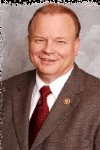
In his weekly column, Sen. Gary Nodler, R-Joplin, sings the praises of the proposed virtual school for Missouri.
On the face of it, a virtual school seems to have much to offer. Not all students succeed in a traditional school atmosphere, and it would obviously offer much to home-schooled students.
Nodler says all of the right things about the legislation; it will follow state law concerning the use of certified teachers (even though members of Nodler's party have been making every effort to water down that law); a portion of the money will go to the local school districts; in truth, the virtual school could be a great law.
But then again, during the same week in which Nodler wrote this column, the Nodler Leadership PAC filed its quarterly disclosure report with the Missouri Ethics Commission. Listed on that report was a $5,000 donation from K12, a McLean, Va.-based company which specializes in selling curriculum to...you guessed it, virtual schools.
As usual, it all comes back to money.
Sunday, April 16, 2006
The coverage of teens' actions

When teenagers do stupid things, they create problems not only for themselves, but for the news media who cover those actions.
When I was a general assignment reporter at The Carthage Press; it was either in 1991 or 1992, I was covering a Carthage High School girls basketball game at Webb City when Coach Ron Wallace pulled his star player out of the game. The girl angrily walked off the court, and headed straight to the locker room, dressed, returned to the court and defiantly threw her uniform at her coach.
When my game account was written, I did not include a word about the girl's actions. I only considered writing about it for a flickering second, then put it out of my mind.
I did consider the negative ramifications of my decision:
-I was not providing a truthful and accurate account of what happened during that ballgame.
-A large crowd had witnessed the event and the people probably wanted to know the truth about what had happened.
-What if the girls' parents were to bring some kind of action against the coach? Wouldn't it be embarrassing for The Press to have to admit that it didn't even bother to write about an event that had turned into a major lawsuit?
-If I didn't write about it, how could people ever trust they were receiving an accurate account of events concerning anything that was written in The Carthage Press?
In retrospect, I probably should have talked to the sports editor Bill Denney or to managing editor Neil Campbell, but I based my decision on the 14 to 15 years of journalism experience I had at that time and on a bad experience I had in 1984 at the Lamar Democrat when I went against by better judgment and wrote about four LHS basketball players who had been kept out of a game for a quarter after being spotted drinking. I was never comfortable with that story, never could justify its running afterward, and I had vowed never to let it happen again.
The afternoon after my account of the Carthage-Webb City game appeared in The Press, sports editor Denney angrily approached me after lunch and said, "I want to talk to you in the conference room NOW!' I didn't argue since I never quite reached 5-9, weigh only about 170 pounds and Bill Denney, a former CHS basketball standout, was well over six foot (probably closer to seven feet) and outweighed me by plenty.
After we entered the conference room, Bill slammed his massive fist against the wooden table and shouted (his entire end of the conversation was a shout), "Why didn't you put anything in your story about --- quitting the team and throwing her jersey at the coach?"
I tried to keep my tone calm. "I'm not going to let that girl's family have to suffer any more embarrassment."
"But it's NEWS," he said.
And he was right, it was news. I tried to explain how I would have taken a different approach if the girl had returned with a gun or if her family had physically assaulted the coach. "I don't want that girls' children to look back some day and see what a stupid thing their mother did."
Bill just glared at me and continued yelling about how I had no right to make that decision. I pointed out to him that reporters and editors make those kinds of decisions all the time.
As the argument escalated, apparently the women at the front desk became concerned that Bill might be killing me, and the second Neil Campbell returned from lunch, he was steered directly to the conference room.
"Boys," Neil said, in his quiet manner, "What's the problem?"
Bill said, "Well, listen to this and you decide what we should have done. This girl quit the Carthage basketball team in the middle of the game, left the court, came back and threw her jersey at the coach. What would you have done?"
Neil looked directly at Bill and said precisely the right thing. "Well, Bill, I would have done exactly what you did. I wouldn't have used it in the story."
Bill stormed out of the room without saying another word. "I assume you were the one who left the incident out of the story," Neil said. I nodded. No further mention was ever made of it, as far as I can recall.
I thought about this incident as I followed the media's coverage of the kidnapping hoax story involving Independence, Kan., teen Kelsey Stelting. It's never easy to know just how far to go with these stories.
Obviously, there is a clear difference between Miss Stelting's actions and the actions of the Carthage High School basketball player. A considerable amount of taxpayer money was wasted as the authorities hunted for the girl and then had to break down her false kidnapping allegation. People raised money to help in the situation and the hoax affected everyone who had invested themselves in this story and in trying to help this young girl.
It was a legitimate story and undeniably should have been a top of page one story in the Globe and the lead story on every newscast, and for the most part, it was.
The TV people did their job, covering the story from every angle. That's what reporters should do. They gather information. But the moment, the authorities expressed doubt about her story, that might have been a time to have trimmed the time spent on recounting every detail of the girl's story. It was fairly obvious from that point on, this was going to be turn out to be a hoax. I also might have eliminated the overgratuitous clips of Independence townspeople who were upset about the incident. They had absolutely every right to be upset, and it made for good television. But as I watched the coverage, it reminded me of the same kind of local journalism feeding frenzy that I wrote about in my novel, Small Town News.
Perhaps, the worst offender was KOAM's decision to have a poll asking viewers what punishment Ms. Stelting should receive. The poll had no news value, whatsoever.
Kelsey Stelting does not deserve a free pass. No matter what problems led her to take these actions, she hurt a lot of people and she cost the taxpayers a lot of money. She deserves the scrutiny of the media and the public, but she did not kill anyone; she just made a stupid teenage mistake. For that to cover the first five minutes of nearly every newscast for two or three days was riveting television, but may not have served the interests of journalism.
As for the Joplin Globe, the revelation that Kelsey Stelting's kidnapping was a hoax, was in the dominant page-one position, the upper right-hand corner. Of course, the article was not written by a Globe reporter, but by The Associated Press.
Wilson reports $925 in contributions
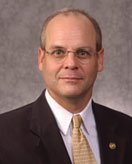
Rep. Kevin Wilson, R-Neosho, reported receiving $925 in contributions during the past three months, and spending $2,029.50, leaving his campaign war chest with $25,804.71, according to documents filed this week with the Missouri Ethics Commission.
Wilson received only two large contributions, getting the maximum $300 from the American Family Insurance PAC, St. Joseph; and from the Golden Rule Insurance Company, Lawrenceville, Ill.
Expenditures included $300 to the Citizens for Ed Groom, $300 from Citizens for Dwight Scharnhorst, $60 to the Newton County Republican Central Committee, and the maximum $1,200 to Missourians for Matt Blunt.
Subscribe to:
Posts (Atom)